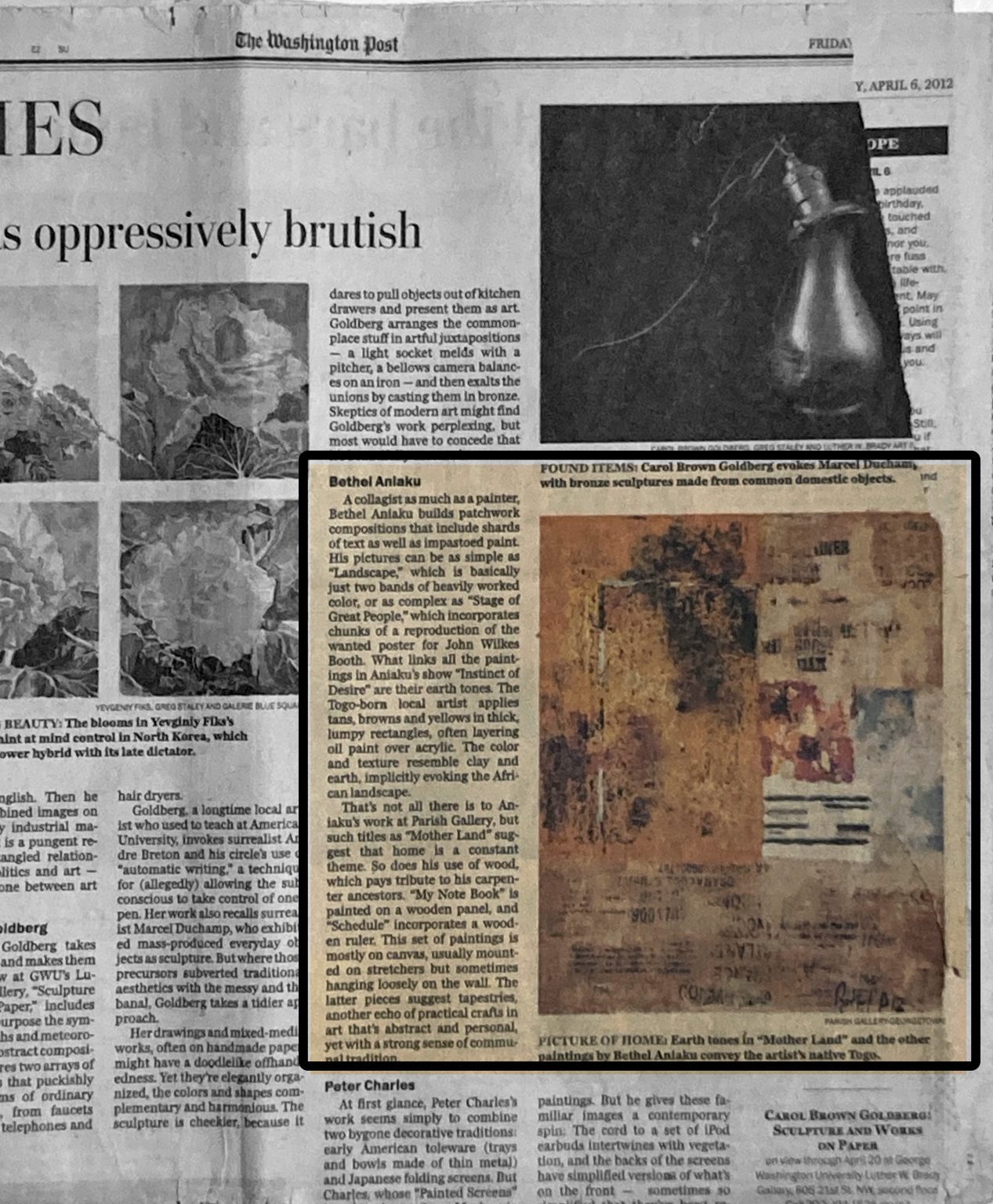
“Instinct of Desire,” Parish Gallery, Georgetown
Reviewing Bethel's solo show at Parish Gallery, The Washington Post called him “a collagist as much as a painter,” building patchwork compositions of text and impastoed paint. The piece singled out the earth tones running through the show — tans, browns and yellows applied in thick, lumpy rectangles, often layering oil over acrylic — and titles such as Mother Land and My Note Book, which the paper linked to Bethel's use of wood as “a tribute to his carpenter ancestors.”
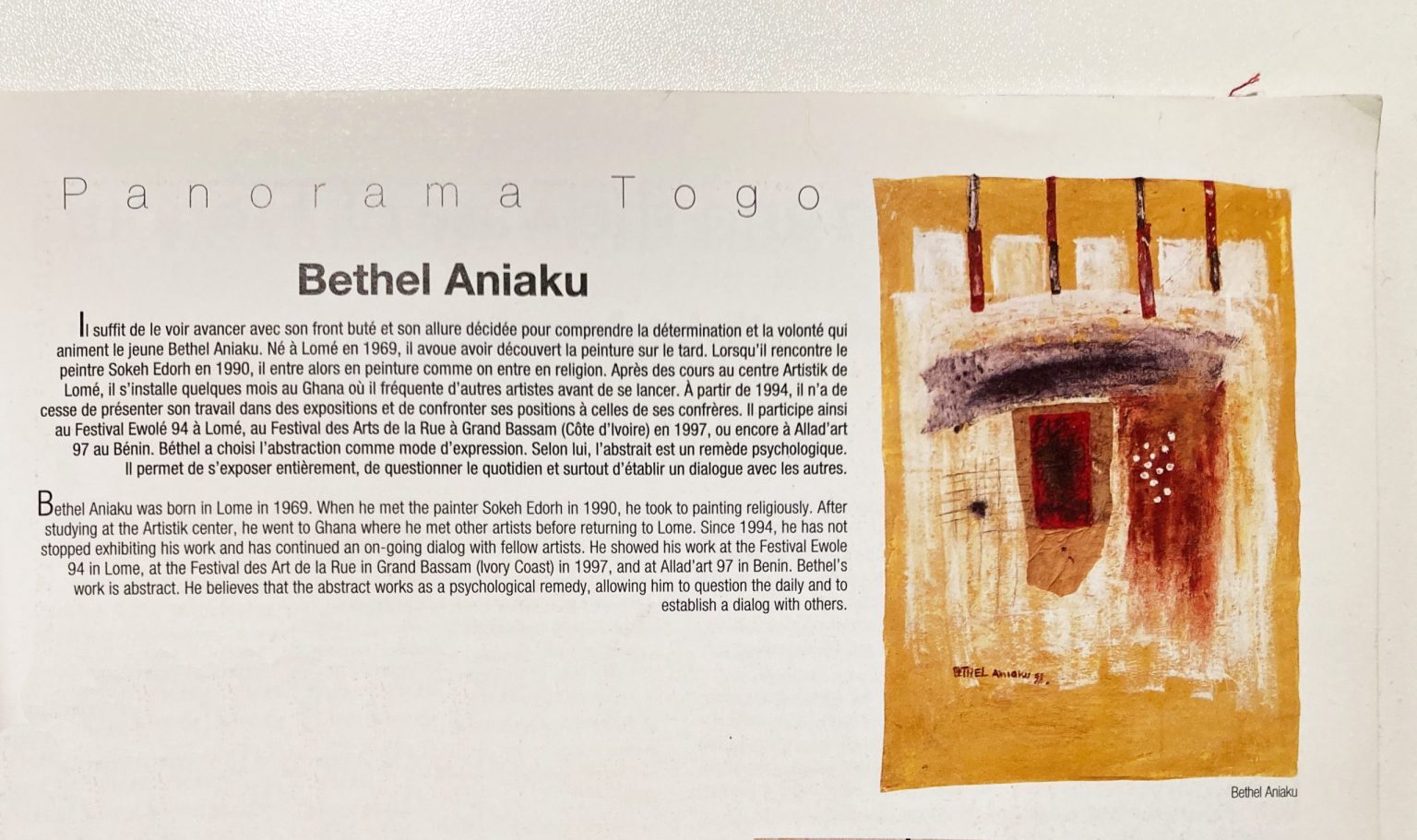
Panorama Togo — Profile: Bethel Aniaku
This early profile traces Bethel's path from his 1969 birth in Lomé to his beginnings as a self-taught painter, describing how he “entered into painting as one enters into religion.” It follows his move through the Artistik centre, a period in Ghana, and his growing exhibition record from Festival Ewolé 94 through Grand Bassam and Allad'Art in Benin. The profile frames abstraction, in Bethel's own words, as “a psychological remedy.”
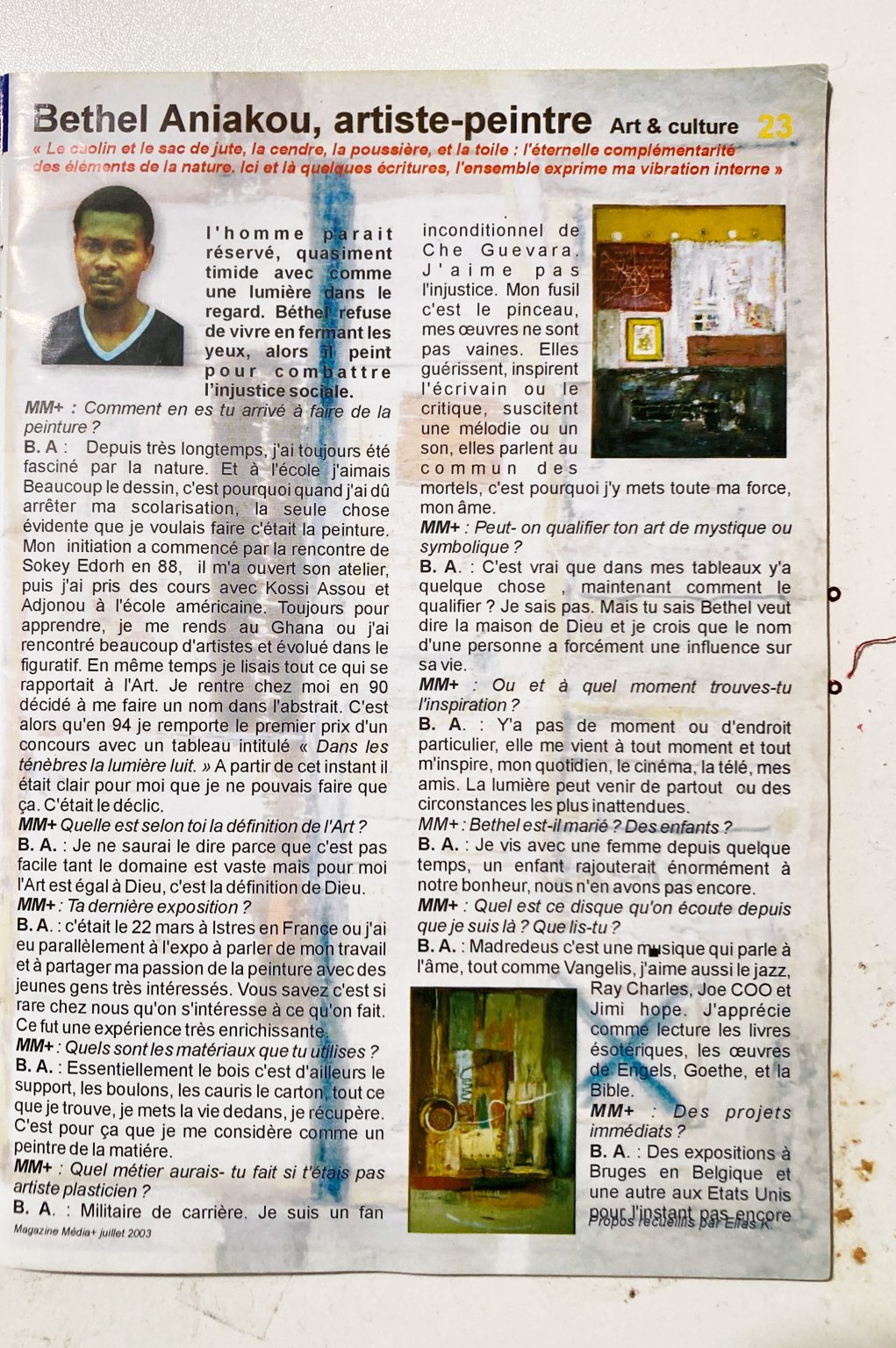
“Bethel Aniaku, artiste-peintre”
A long-form interview in which Bethel discusses his materials of choice — wood above all, plus bolts, cowrie shells and cardboard — and describes himself as “un peintre de la matière,” a painter of matter. He speaks about painting to combat social injustice, declaring “mon fusil c'est le pinceau” (“my rifle is the paintbrush”), and names Che Guevara, Madredeus and Vangelis among his influences.
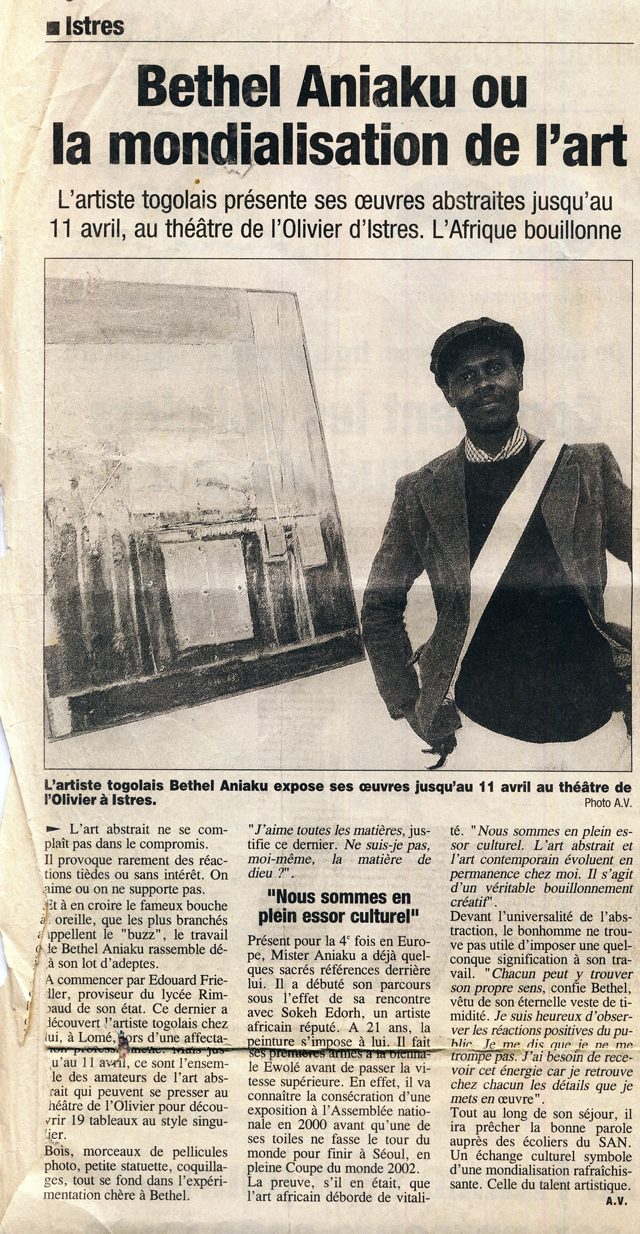
“Bethel Aniaku ou la mondialisation de l'art”
Covering a solo exhibition of nineteen paintings at the Théâtre de l'Olivier, this feature traces Bethel's international itinerary — his fourth appearance in Europe at the time — from his early self-taught beginnings through an exhibition at the Assemblée Nationale in Paris to a world tour that closed in Seoul during the 2002 World Cup.
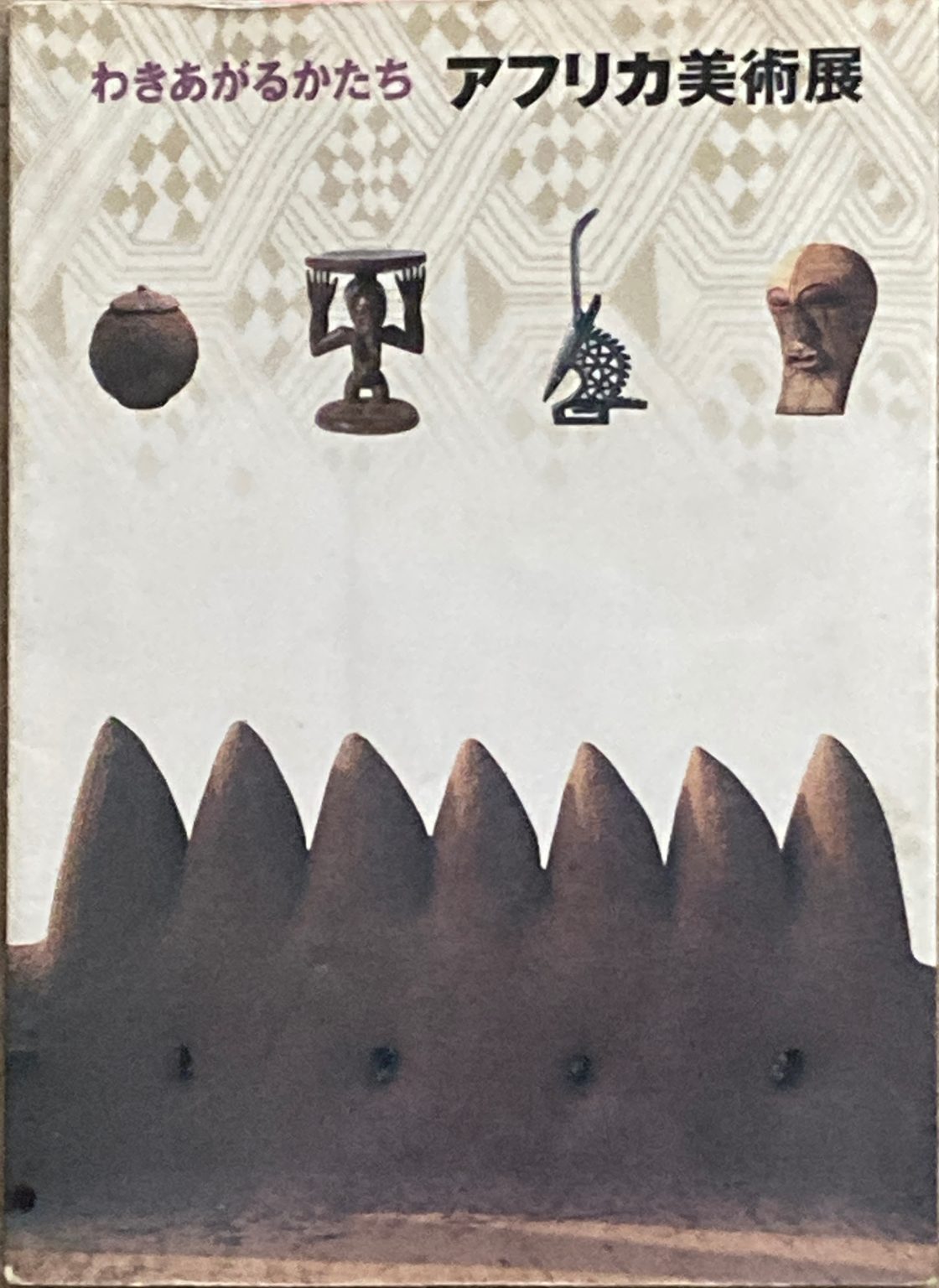
African Art Exhibition — 「わきあがるかたち」
Bethel's mixed-media canvas La Force Tranquille (2001, oil on canvas and mixed media, 120 × 84 cm) was included in this touring exhibition of contemporary and traditional African art in Japan, presented in the catalog alongside carved masks, ceremonial furniture and pottery from across the continent.
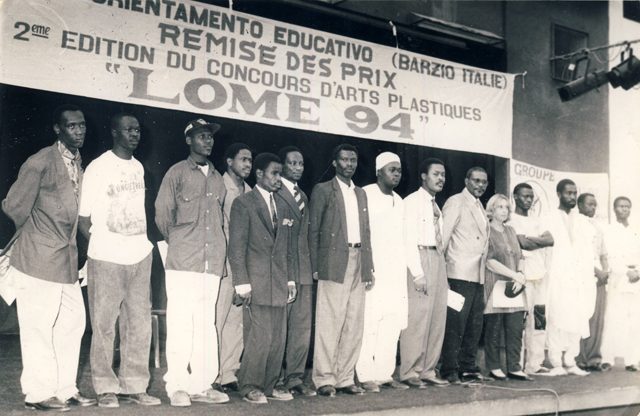
Award (4th Position), “Lomé 94”
A defining early milestone: in 1994, Bethel received a fourth-position award in a national visual-art competition organized by C.O.E., an Italian organization based in Barzio, pictured here at the award ceremony in Lomé. The same year marked his first group exhibition, at Festival Ewolé.
